

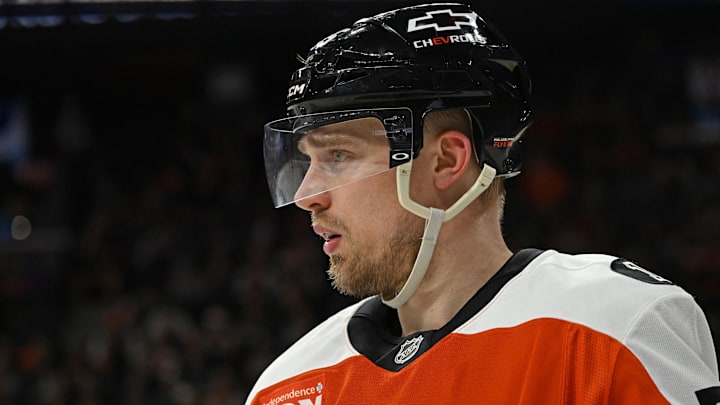
At the NHL trade deadline, one of the loudest rumors around the Philadelphia Flyers involved veteran defenseman Rasmus Ristolainen.
The narrative felt inevitable: the Flyers were rebuilding, they had a pipeline of big right-shot defensemen coming, and Ristolainen — a physical veteran with trade value — looked like the obvious asset to move.
Except, apparently, he never was.
Despite the speculation, general manager Danny Brière made one thing clear after the deadline: the Flyers were never desperate to trade Ristolainen. In fact, the opposite may have been true.
According to reports, the Flyers were seeking a first-round pick in return for Ristolainen. That’s a significant ask for a defenseman with one year remaining on his contract, but it also tells you exactly how the organization views him.
Brière’s message was simple: if you want Ristolainen, pay like he matters.
Teams called. Discussions happened. But no club matched Philadelphia’s valuation. And when that happens in a rebuild, the decision becomes simple — keep the player.
Moving Ristolainen for a lesser package would have undermined the Flyers’ leverage and sent a message that they were simply trying to clear salary or roster space. Brière refused to do that.
Flyers believe Rasmus Ristolainen is more valuable as a safety net for developing defensemen
The second, quieter reason Ristolainen stayed put is development. Philadelphia’s system is suddenly loaded with big right-shot defensemen, including prospects like Oliver Bonk, Spencer Gill and Carter Amico. The Flyers also added David Jiříček in the Bobby Brink deal.
But there’s a difference between having prospects and relying on them immediately. Brière admitted as much when discussing Ristolainen’s workload. The veteran has been playing massive minutes — over 27 in one game and more than 22 in another — something the young defensemen simply aren’t ready to absorb yet. Ristolainen, then, serves as a buffer between the present and the future.
There’s also timing to consider. Ristolainen just boosted his stock with a strong performance for Finland at the 2026 Milan Cortina Olympics, helping the team capture bronze while showcasing the physical, shutdown style that contenders covet. If that level of play continues into next season, his value may actually increase — and at that point, teams facing injuries or playoff pushes could be more willing to meet Philadelphia’s price.
From the outside, Philadelphia keeping Ristolainen might look like a missed chance to cash in on a veteran. But internally, the reasoning is clear. The Flyers didn't fail to trade Ristolainen; they chose not to sell him cheap.
Until someone meets their valuation — or until the next wave of defensemen is truly ready — the Flyers are content to keep their 6-foot-4 veteran anchoring the blue line. And for a team still building its future, that patience may end up paying off far more than a rushed trade ever could.
 Add us as a preferred source on Google